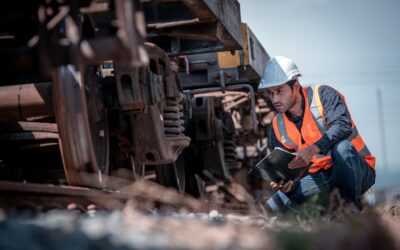

Train collision evidence can make or break your injury claim, so gathering it quickly and thoroughly should be your top priority once you are safe. In Aurora, Colorado, the moments and days following a train crash are critical for preserving proof of what happened, who was responsible, and how the accident affected your life. Our attorneys at Cave Law have helped many train accident victims in the Denver metro area build strong cases by acting fast and documenting everything. The right evidence supports your story and protects your right to fair compensation.
Key Takeaways
- Photograph the scene, your injuries, and any visible track or signal problems immediately after a train collision in Aurora.
- Collect witness contact information and statements before people leave the scene.
- Preserve medical records, official reports, and personal documentation to support your injury claim under Colorado law.
Why Train Collision Evidence Matters Under Colorado Law
Colorado operates as an at-fault state for personal injury claims. This means whoever is proven responsible for the crash typically pays for the resulting damages. Under C.R.S. 13-21-111, Colorado follows a comparative negligence rule. You can still recover compensation even if you were partially at fault, as long as your share of responsibility is 50% or less.
Strong evidence helps establish fault and counter any attempts to shift blame onto you. Without it, insurance companies and railroad corporations may downplay your injuries or deny your claim entirely. Our team has seen how quickly evidence disappears after a train accident, which is why we urge clients to act immediately.
You also need to keep the statute of limitations in mind. Under C.R.S. 13-80-102, you generally have three years from the date of your injury to file a personal injury lawsuit in Colorado. Waiting too long to gather evidence makes your case harder to prove.
Document the Scene Right After the Crash
Train collision scenes change rapidly. Crews arrive to clear debris, move train cars, and restore tracks to service. Your window to capture visual evidence is small, so use it wisely.
If you are physically able, use your smartphone to photograph and video everything you can safely reach. Focus on these elements:
- Damage to the train, including dents, broken windows, and burn marks
- Track conditions such as shifted rails, cracks, or debris
- Railroad signals, crossing gates, and warning signs
- Your visible injuries before receiving medical treatment
- Weather conditions, lighting, and the time of day
Take wide shots to show the overall scene and close-ups to capture specific details. If you can record video, narrate what you see as you move through the area. This creates a real-time record that investigators and attorneys can use later.
Capture Signal and Gate Malfunctions
Crossing signal failures contribute to many train accidents in Aurora and along the RTD corridors. If the gates did not lower, warning lights did not flash, or bells did not sound, document that immediately. These details can point to railroad negligence or maintenance failures.
Collect Witness Information Before They Leave
Witnesses provide independent accounts that can support your version of events. Other passengers, bystanders on nearby streets, and people in parked cars may have seen things you missed. The problem is that witnesses tend to leave once they have spoken with first responders.
Approach anyone willing to talk and ask for their full name, phone number, and email address. If they agree, record a brief audio or video statement describing what they observed. Even a few sentences can help fill gaps in the official record.
Be polite and explain that you are gathering information to understand what happened. Most people are willing to help someone who was just injured. If someone declines, respect their decision and move on.
Obtain Official Reports and Records
Official documentation adds credibility to your claim. In Aurora, the Aurora Police Department or Colorado State Patrol will respond to serious train collisions and file a report. Request a copy of this report as soon as it becomes available.
Railroad companies also generate internal incident reports, maintenance logs, and crew records. These documents can reveal whether the train was operating properly and whether the company followed safety protocols. An experienced attorney can help you obtain these records through formal discovery.
Medical Records Are Essential
Seek medical attention immediately, even if you feel fine. Some injuries, including traumatic brain injuries and spinal cord damage, may not show symptoms right away. Your medical records create a direct link between the collision and your injuries.
Keep copies of emergency room reports, discharge papers, prescriptions, imaging results, and follow-up visit notes. These documents show the severity of your injuries and the treatment you required. We recently helped a client who was struck at a crossing near Parker Road recover significant compensation after her medical records documented a delayed onset concussion that required months of treatment.
Maintain Personal Documentation of Your Experience
Your own account matters. Write down everything you remember about the crash as soon as you are able. Include what you saw, heard, and felt before, during, and after the collision. Stick to facts and be as specific as possible.
Keep a daily journal tracking your physical and emotional recovery. Note symptoms like headaches, dizziness, sleep problems, anxiety, or pain that develops over time. This log helps demonstrate the ongoing impact of your injuries.
Save all receipts related to your accident. This includes medical bills, prescription costs, rideshare fares to appointments, and replacement items damaged in the crash. These out-of-pocket expenses factor into your total claim.
Organize Your Train Collision Evidence for Maximum Impact
Scattered files and unlabeled photos make it harder to present your case effectively. Insurance adjusters, attorneys, and investigators need to review your evidence quickly and clearly.
Create a system that works for you:
- Use separate folders for medical records, witness statements, photos, and receipts
- Label each file with the date, location, and a brief description
- Back up everything to cloud storage or an external drive
- Write a timeline that puts events in chronological order
Organization shows that you took your claim seriously from the start. It also makes it easier for our attorneys to identify what additional evidence you may need.
How Cave Law Helps Train Accident Victims in Aurora
Train collision cases often involve multiple parties, including railroad companies, equipment manufacturers, and government entities. These cases require thorough investigation and knowledge of federal rail safety regulations alongside Colorado personal injury law.
Our team has over 15 years of experience handling serious injury cases throughout Aurora, Parker, and the greater Denver metro area. We know how to gather evidence that holds up under legal scrutiny and how to counter the tactics large corporations use to minimize payouts.
If your train accident resulted in a wrongful death, spinal cord injury, or traumatic brain injury, the stakes are even higher. You deserve an attorney who understands how to document these catastrophic losses and fight for the compensation your family needs.
Do not wait to take action. Train collision evidence fades quickly, and the sooner you start building your case, the stronger your position becomes. Call Cave Law at (303) 680-9000 for a free consultation available 24/7. Our office is located near I-225 and Parker Road in Aurora, and we are ready to help you take the right steps forward.
Frequently Asked Questions
How long do I have to file a train accident claim in Colorado?
Under C.R.S. 13-80-102, you generally have three years from the date of your injury to file a personal injury lawsuit. However, acting quickly helps preserve critical evidence that could support your claim.
What if I was partially at fault for the train collision?
Colorado follows comparative negligence rules under C.R.S. 13-21-111. You can still recover compensation as long as you were 50% or less at fault. Your recovery amount will be reduced by your percentage of responsibility.
Should I talk to the railroad company’s insurance adjuster?
Be cautious before giving recorded statements to any insurance company. Their goal is to minimize payouts. Speaking with an experienced personal injury attorney first helps protect your rights and ensures you do not accidentally harm your claim.
What types of compensation can I recover after a train accident in Aurora?
You may be entitled to compensation for medical expenses, lost wages, pain and suffering, property damage, and long-term care if you suffered serious injuries like TBI or spinal cord damage. Wrongful death claims may also provide recovery for surviving family members.
Last reviewed by Jeremy Cave, Personal Injury Attorney — April 1, 2026. Cave Law LLC serves Aurora, Parker, and the greater Denver metro area. Content is for informational purposes. Laws may change; consult an attorney for advice specific to your situation.
We Can Help.
Get a Free Consultation with Cave Law LLC
Free consultation. We serve Aurora, Denver, Centennial, Englewood, Littleton, Parker, Castle Rock.