
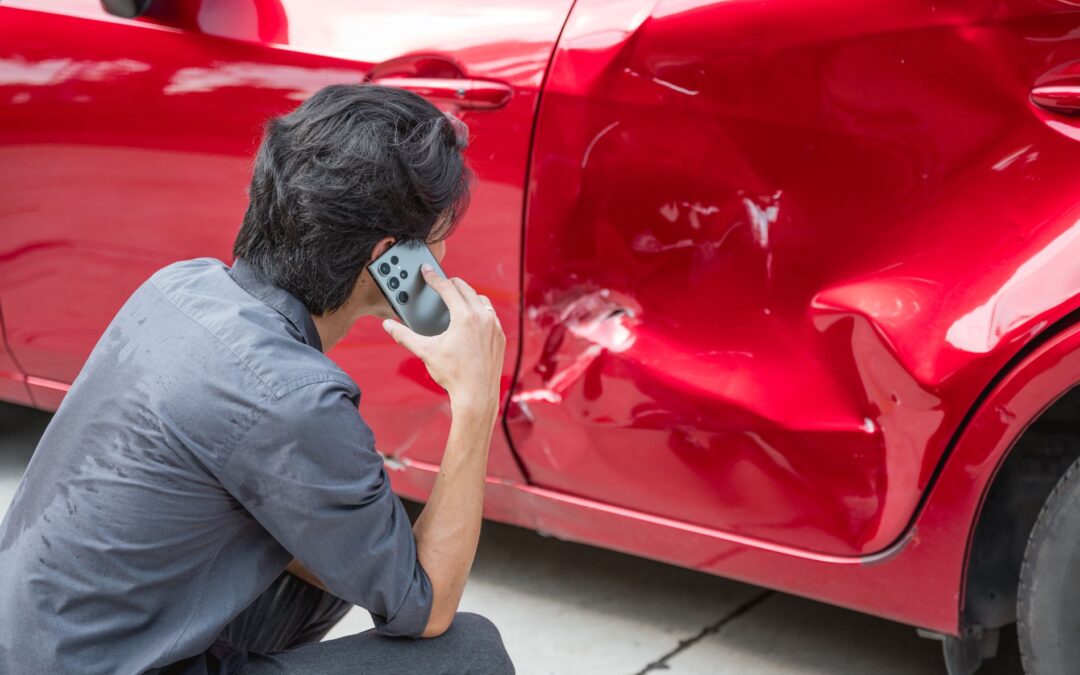
Filing a Colorado accident report after a crash with an uninsured driver is one of the most important things you can do to protect your claim. The other driver having no insurance does not mean you are out of options. Colorado law and your own auto policy may still give you a real path to compensation for your injuries, your lost income, and your vehicle. Here is what you need to understand.
Key Takeaways
- Colorado is a fault-based state, meaning the driver who caused the crash is legally responsible for your damages, even if they have no insurance.
- Your own auto policy’s uninsured and underinsured motorist (UM/UIM) coverage may step in to pay what the at-fault driver cannot.
- Filing an official police report and notifying your insurer quickly are both critical steps that can protect your claim from the start.
What “Uninsured” and “Underinsured” Actually Mean in Colorado
An uninsured driver has zero auto liability coverage. An underinsured driver has some coverage, but not enough to pay for the full harm they caused. Both situations happen regularly on Aurora roads, on I-225, on Smoky Hill Road, and throughout the metro area.
Colorado is a fault-based state. Under Colorado Revised Statutes Title 10, the driver who caused the crash bears legal responsibility for the resulting damages. The problem is that being legally responsible and actually being able to pay are two very different things. Collecting directly from an uninsured individual is often impractical, especially when your injuries require ongoing medical care.
That is where your own coverage becomes essential.
How UM/UIM Coverage Works After an Uninsured Driver Crash
Uninsured and underinsured motorist coverage, commonly called UM/UIM, is designed for exactly this situation. When the at-fault driver cannot pay, your UM/UIM coverage steps into their shoes and compensates you as if it were their policy.
UM/UIM coverage can pay for:
- Medical expenses, both immediate and long-term
- Lost wages and reduced future earning capacity
- Pain, suffering, and loss of enjoyment of daily life
- Some hit-and-run crashes where the other driver cannot be identified
Here is something many drivers do not realize: you have to choose your UM/UIM limits before an accident happens. Your insurer is not required to push you toward higher limits. If you have not reviewed your policy recently, now is the time. Drivers across Aurora, Parker, and the Denver metro who carry higher UM/UIM limits consistently have more options when the worst happens.
State Law
Under Colorado law, insurers are required to offer UM/UIM coverage, but you can waive it in writing or choose lower limits. If you did not actively select high limits, you may have less coverage than you think. Check your declarations page before you need it.
Filing a Colorado Accident Report: Why It Matters So Much Here
When the other driver has no insurance or flees the scene, the official accident report becomes the foundation of your claim. It documents who was involved, what happened, and what law enforcement observed. Without it, your insurer has less to work with, and more room to question your account.
Call 911 at the scene. A responding officer will document the crash, and you can later request a copy of the report through the Denver Police Department accident report portal or through the law enforcement agency that responded to your specific location. In Aurora, that is typically the Aurora Police Department.
A police report is especially important when:
- The other driver admits they have no insurance or no valid license
- The other driver tries to leave before police arrive
- Fault is disputed or the other driver’s story changes at the scene
- You are filing a hit-and-run claim with your own insurer
Our attorneys have handled cases where the police report was the single piece of evidence that kept a UM/UIM claim alive when the other driver disappeared entirely after the crash. That documentation is not optional. It is the record everything else gets built on.
Insurance Trap
Your own insurance company may seem helpful right after an uninsured driver crash, but they are also evaluating your claim. Avoid giving a recorded statement before you speak with an attorney. What you say early on can be used to limit what they pay you later.
What to Do Right After the Crash
The steps you take in the first hours after a crash shape everything that follows. Start with your safety and your health.
- Call 911 so police and medical help respond to the scene
- Accept any medical evaluation offered and follow up with a doctor as soon as possible
- Photograph both vehicles, road conditions, skid marks, and traffic signals
- Get names and contact information from witnesses
- Exchange information with the other driver, even if they say they have no insurance
- Notify your own insurer about the crash promptly
Even if you feel okay at the scene, get checked. Spinal cord injuries, traumatic brain injuries, and soft tissue damage often appear hours or days after the initial impact. Early medical records create the documented link between the crash and your injuries that your claim depends on.
How a Car Accident Lawyer Strengthens Your Uninsured Motorist Claim
Your own insurance company is not automatically on your side in a UM/UIM claim. They have financial incentives to limit what they pay, and they have experienced adjusters working that angle from day one. Our attorneys have spent over 17 years handling car accident claims in Aurora and the surrounding area, and we know the tactics insurers use to slow down or reduce these claims.
We can help by investigating the crash independently, preserving evidence before it disappears, identifying every available coverage source, and handling all communication with your insurer so you can focus on recovery. Your claim may include compensation for medical bills, lost wages, long-term pain, and property damage. Colorado also has strict deadlines for injury claims and notice requirements inside your own policy. Missing them can cost you the right to recover.
If you were hurt in a crash with an uninsured driver in Aurora, Parker, or anywhere in the Denver metro, call Cave Law at (303) 680-9000. We offer free consultations 24 hours a day, 7 days a week. You should understand your options before you make any decisions.
We Can Help.
Get a Free Consultation with Cave Law LLC
Free consultation. We serve Aurora, Denver, Centennial, Englewood, Littleton, Parker, Castle Rock.
Frequently Asked Questions
What happens to an uninsured driver in an accident?
In Colorado, an uninsured driver who causes a crash faces serious consequences. Their license and registration can be suspended, and they are personally liable for all damages they caused, including medical bills, lost wages, and property damage. In practice, collecting directly from an uninsured driver is difficult, which is why your own UM/UIM coverage becomes so important. Law enforcement will also note the lack of insurance in the official accident report, which can support your civil claim.
What is the 3 second rule in Colorado?
The three-second rule is a safe following distance guideline, not a Colorado statute. It means you should maintain at least three seconds of space between your vehicle and the car in front of you at highway speeds. In accident liability cases, following too closely is a factor that can establish fault. If a driver rear-ended you because they were tailgating, that behavior is relevant to your injury claim regardless of whether they were insured.
What happens if I have an accident with an uninsured driver?
If you have an accident with an uninsured driver in Colorado, your first step is to call the police and file an official accident report. Then notify your own insurer. If you carry UM/UIM coverage, your own policy can step in to cover your medical expenses, lost income, and pain and suffering up to your policy limits. A car accident attorney can help you identify all available coverage sources and handle negotiations with your insurer to pursue full compensation.
What not to say to your insurance company after an accident?
Do not say you are “fine” or minimize your injuries, even if you feel okay at the scene. Avoid speculating about fault or apologizing. Do not agree to a recorded statement without speaking with an attorney first. Never accept an early settlement offer before you know the full extent of your injuries and damages. What you say to your own insurer in a UM/UIM claim can directly affect how much they pay you, so be careful and deliberate with every communication.
Last reviewed by Jeremy Cave, Personal Injury Attorney — April 27, 2026. Cave Law serves Aurora, Parker, Denver. Content is for informational purposes. Laws may change; consult an attorney for advice specific to your situation.